


We stand with Canada


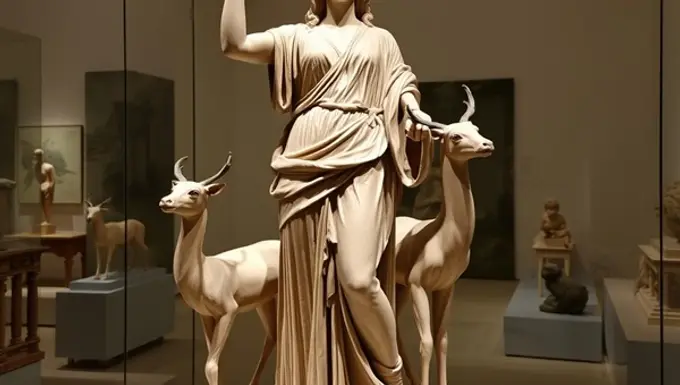
Statue of Artemis
Ancient History, Museums, Ruins
Statue of Artemis in North Cyprus: The Ancient Goddess Reborn
Introduction
Among the most remarkable archaeological treasures ever discovered in North Cyprus is the Statue of Artemis, an ancient masterpiece that connects the island to the myths, religions, and artistic traditions of the ancient Mediterranean world. Found near the ancient city of Salamis, this impressive sculpture has become one of the most important exhibits in North Cyprus and provides a fascinating insight into the beliefs and culture of the Roman period. Today, visitors can view the statue in the Güzelyurt Archaeology and Nature Museum, where it stands as a symbol of the island's rich archaeological heritage.
Who Was Artemis?
Artemis was one of the most important goddesses in ancient Greek mythology. She was the daughter of Zeus and Leto and the twin sister of Apollo. She was revered as the goddess of:
Wildlife
Fertility
Childbirth
Nature
Protection of young women
Throughout the Greek and Roman worlds, Artemis was worshipped in many different forms. One of the most famous was Artemis of Ephesus, a fertility goddess whose cult spread across the eastern Mediterranean.
The Discovery of the Statue
The statue's story is almost as fascinating as the sculpture itself. In August 1980, an Italian tourist named Sergio Galoni was swimming near the ancient city of Salamis when he noticed what appeared to be an ancient object beneath the water. Upon investigation, the object turned out to be an extraordinary statue of Artemis. Archaeologists later confirmed it was a representation of Artemis in the Ephesian style. The sculpture was carefully recovered and eventually transferred to the museum in Güzelyurt for conservation and display.
A Statue Hidden for Nearly Two Thousand Years
Experts date the statue to approximately the 2nd century AD during the Roman period. The sculpture represents Artemis as a goddess of abundance and fertility, reflecting the widespread influence of the cult of Artemis throughout the Roman Empire. The fact that the statue survived underwater for centuries makes its preservation particularly remarkable.
The Missing Pieces Mystery
For many years the statue was incomplete. When it was originally discovered, several important pieces were missing, including one hand and one of the accompanying deer figures that traditionally appear beside Artemis. Then, in an extraordinary twist, archaeologists working in the same area around Salamis discovered the missing fragments approximately 37 years later. After extensive conservation work, the hand and deer figure were successfully reunited with the main sculpture, effectively completing the statue for the first time in nearly two millennia. This discovery transformed the statue from an impressive archaeological find into one of North Cyprus's most important restored treasures.
Artistic Features
The statue displays characteristics associated with Artemis Ephesia, the famous version of Artemis worshipped in the ancient city of Ephesus in modern-day Türkiye. Notable features include:
Rich decorative carving
Symbolism connected to fertility and abundance
Deer figures associated with Artemis
Roman-period sculptural techniques
Religious iconography linking Cyprus with wider Mediterranean cults
The quality of workmanship demonstrates the high level of artistic skill present in Roman Cyprus.
Salamis and the Cult of Artemis
The ancient city of Salamis was one of the most important cities in ancient Cyprus. Founded according to legend by Teucer after the Trojan War, Salamis became a major trading, cultural, and religious centre. Archaeological discoveries have revealed numerous statues, temples, and public buildings connected to Greek and Roman worship. The discovery of the Artemis statue near Salamis provides evidence that the worship of Artemis was firmly established in this region of Cyprus during Roman times.
Conservation and Restoration
Recovering underwater artefacts is only the first step in preserving them. Because the statue had spent centuries beneath the sea, conservators faced significant challenges including:
Salt contamination
Structural weakness
Surface deterioration
Cracking and fragmentation risks
Museum specialists carried out lengthy desalination and conservation treatments before the newly discovered fragments could be safely attached. The restoration process took approximately a year.
Visiting the Statue Today
The completed statue is displayed at the:
Güzelyurt Archaeology and Nature Museum
The museum houses one of the finest archaeological collections in North Cyprus and includes:
Ancient statues
Roman artefacts
Bronze Age finds
Byzantine exhibits
Natural history displays
The Artemis statue is one of the museum's most celebrated exhibits and is often considered a highlight of any visit.
Why the Statue Matters
The Statue of Artemis is significant because it:
Demonstrates the influence of Greek and Roman religion in Cyprus.
Connects North Cyprus with the wider ancient Mediterranean world.
Represents one of the most important underwater archaeological discoveries on the island.
Illustrates advanced Roman sculptural craftsmanship.
Shows the importance of conservation and restoration in preserving cultural heritage.
Its discovery, restoration, and display have helped preserve an important chapter of Cypriot history for future generations.
Interesting Facts
The statue was discovered by a tourist rather than an archaeological team.
It was found near the ancient city of Salamis.
It dates to approximately the 2nd century AD.
Missing parts were discovered more than three decades after the original find.
The statue is associated with Artemis as a goddess of fertility and abundance.
It is now one of the most important exhibits in Güzelyurt.
Conclusion
The Statue of Artemis is one of North Cyprus's most fascinating archaeological treasures. Its accidental discovery, centuries-long burial beneath the sea, and eventual restoration make it a remarkable survivor from the ancient world. More than just a sculpture, it represents the religious beliefs, artistic achievements, and cultural connections that shaped Cyprus nearly two thousand years ago. For visitors interested in history, archaeology, mythology, or ancient Cyprus, the Statue of Artemis remains an essential piece of the island's heritage and one of the finest treasures preserved in North Cyprus today.
Frequently Asked Questions
Q. Where was the Statue of Artemis found?
A. It was discovered in the sea near the ancient city of Salamis on the east coast of North Cyprus.
Q. When was it discovered?
A. The statue was discovered in August 1980 by an Italian tourist.
Q. How old is the statue?
A. Archaeologists date it to approximately the 2nd century AD.
Q. Where can I see the statue today?
A. It is displayed in the Güzelyurt Archaeology and Nature Museum.
Q. Why is Artemis important?
A. Artemis was one of the most widely worshipped goddesses of the ancient Greek and Roman worlds, associated with nature, fertility, hunting, and protection.
See also :