


Easter in Northern Cyprus: Traditions, Food, Church Services and Celebrations

Easter in Northern Cyprus: Traditions, Food, Church Services and Celebrations
Easter is one of the most important religious and cultural celebrations connected to Cyprus. Although Northern Cyprus is predominantly Muslim today, Easter traditions remain an important part of the island’s heritage and are still celebrated within Orthodox Christian communities, historic villages, churches, and expat groups.
Visitors to Northern Cyprus during spring may notice Easter foods in bakeries, church services in historic monasteries, and special meals offered by restaurants and hotels. This guide explains how Easter is celebrated in Northern Cyprus, its traditions, food, religious significance, and where visitors can experience it.
When is Easter in Northern Cyprus?
Cyprus traditionally follows the Greek Orthodox calendar, which means Easter is often celebrated on a different date from Western Easter. Two different Easter dates are common:
Western Easter – celebrated by Catholic and Protestant churches using the Gregorian calendar.
Orthodox Easter – celebrated by the Orthodox Church using the Julian calendar.
Orthodox Easter usually occurs one to five weeks later than Western Easter and is the main Easter celebration connected with Cypriot traditions. This year, Easter Sunday falls on April 5th.
The Religious Meaning of Easter
For Orthodox Christians, Easter celebrates the resurrection of Jesus Christ and represents the most sacred event in the Christian calendar. The celebration follows a period of fasting and reflection known as Lent, which lasts for forty days and leads into Holy Week, the final week before Easter Sunday.
Important days include:
Palm Sunday – marking Jesus’ entry into Jerusalem
Good Friday – commemorating the crucifixion
Holy Saturday – preparation for the resurrection
Easter Sunday – celebration of Christ rising from the dead
Holy Week in Cyprus
During Holy Week, Orthodox churches hold daily services. Although many churches in Northern Cyprus are no longer regularly used for worship, some services still take place in certain areas. Churches may open for Easter services in locations such as:
Historic churches in the Karpaz Peninsula
Religious sites near Dipkarpaz
Occasional services in historic churches in Gazimağusa (Famagusta)
The atmosphere of Orthodox Holy Week services is very distinctive, with candlelight, incense, chanting, and traditional hymns.
The Midnight Resurrection Service
The most important religious moment of Easter occurs on Holy Saturday night at midnight. During the resurrection service:
Churches go dark shortly before midnight.
The priest announces “Christos Anesti” (Christ is Risen).
The congregation lights candles from the Holy Flame.
Church bells ring and fireworks are often set off.
People then take their lit candles home, symbolising the light of the resurrection.
Traditional Easter Food in Cyprus
Food is a central part of Easter celebrations across Cyprus.
Flaounes
Flaounes are traditional Easter pastries made with:
Halloumi cheese
Eggs
Mint
Raisins
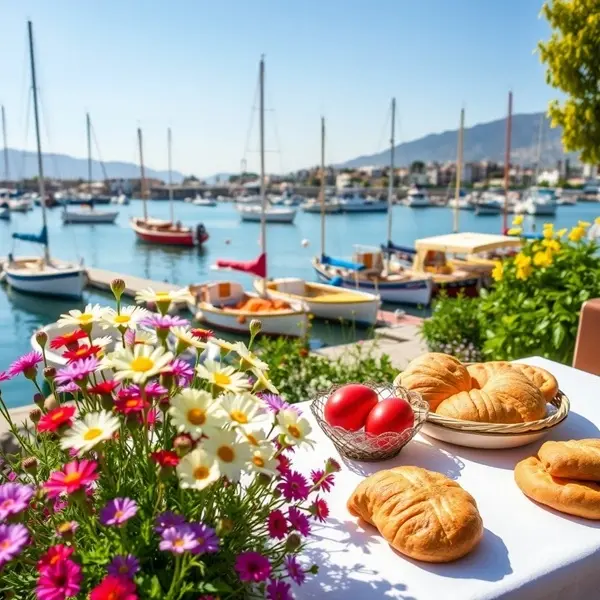
They are baked especially for Easter and can often be found in bakeries around Northern Cyprus during the Easter period.
Red Easter Eggs
Eggs are traditionally dyed bright red. The red colour symbolises:
The blood of Christ
New life and rebirth
Families often play an egg-cracking game where two people tap eggs together until one breaks.
Roast Lamb
Roast lamb is the centrepiece of many Easter Sunday meals. In Cyprus it is often cooked slowly on charcoal or a spit and served with potatoes, salad, and bread.
Tsoureki
Tsoureki is a sweet braided bread flavoured with spices such as mahleb or mastic and is another traditional Easter treat.
Easter in Northern Cyprus Today
While Easter is not an official public holiday in Northern Cyprus, it is still visible in several ways:
Bakeries selling Easter pastries such as flaounes
Churches holding occasional religious services
Restaurants offering Easter Sunday meals
Expat communities organising Easter gatherings
Many restaurants in Girne and surrounding areas offer special Easter lunches, often featuring roast lamb or traditional Sunday roasts.
Religious Sites Associated with Easter
Several historic religious sites in Northern Cyprus are connected with Orthodox traditions.
Apostolos Andreas Monastery
Located at the eastern tip of the Karpaz Peninsula, Apostolos Andreas Monastery is one of the most important Orthodox pilgrimage sites on the island. Although it is not always open for regular services, special religious events sometimes take place there.
Ayios Philon Church
Near Dipkarpaz, the ruins of Ayios Philon Church mark the site of an early Christian basilica dating back to the 5th century.
Historic Churches in Gazimağusa
The walled city of Gazimağusa contains numerous historic churches from the medieval period, reflecting the island’s long Christian heritage.
Easter and Spring in Northern Cyprus
Easter usually falls between late March and late April, making it one of the most beautiful times to visit Northern Cyprus. Spring brings:
Mild temperatures between 18°C and 25°C
Wildflowers across the countryside
Ideal conditions for sightseeing and hiking
A lively atmosphere as the tourism season begins
Many visitors combine Easter celebrations with exploring historical sites, beaches, and nature areas.
Easter for Expats in Northern Cyprus
The large international community living in Northern Cyprus also celebrates Easter. Common activities include:
Church services in English
Community Easter lunches
Family gatherings
Charity events
Hotels and restaurants often advertise special Easter Sunday menus.
Final Thoughts
Easter in Northern Cyprus reflects the island’s deep cultural and religious history. While the celebrations are more modest than in South Cyprus, the traditions remain visible through historic churches, traditional foods, and community gatherings.
For visitors, Easter offers a chance to experience Cyprus in spring, when the weather is pleasant, the countryside is green, and the island’s long traditions are still very much alive.


Comments